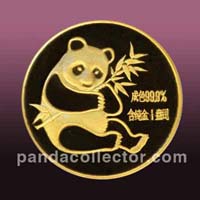
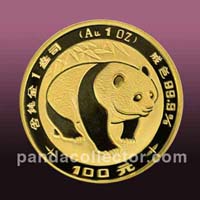
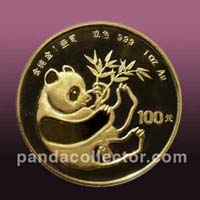
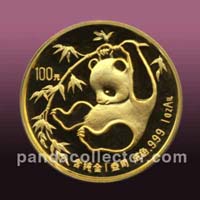
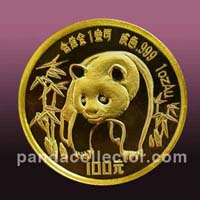
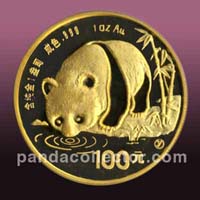
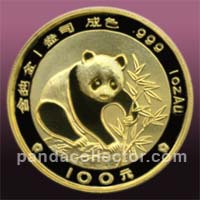
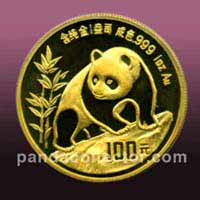
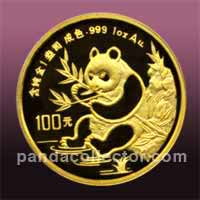
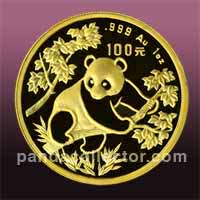
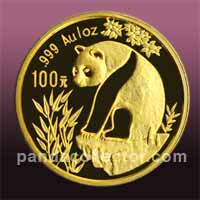
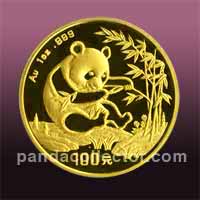
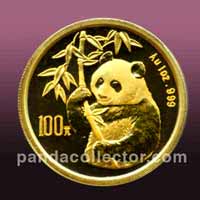
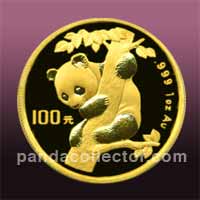
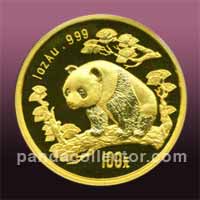
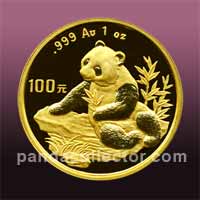
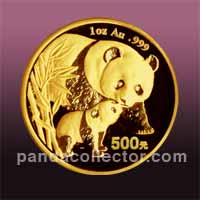
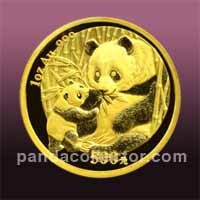
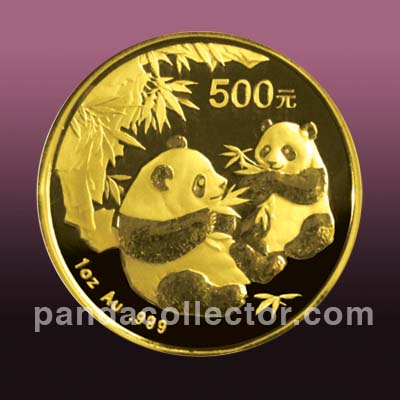
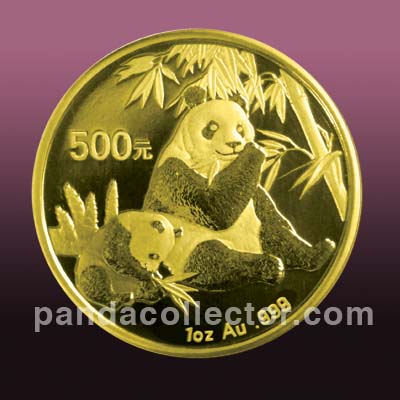
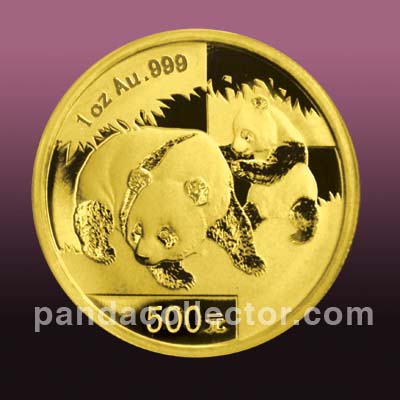
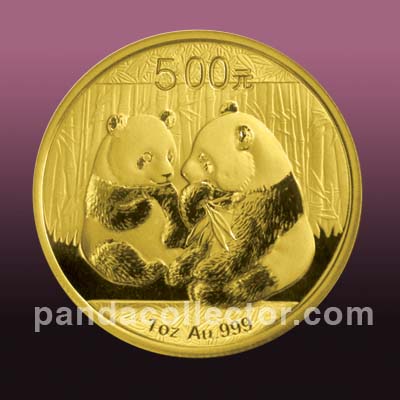
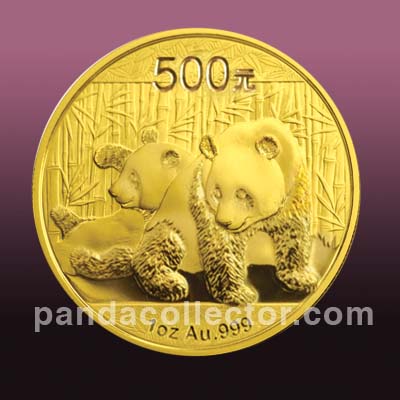
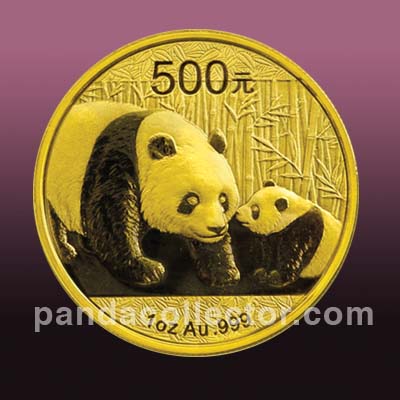
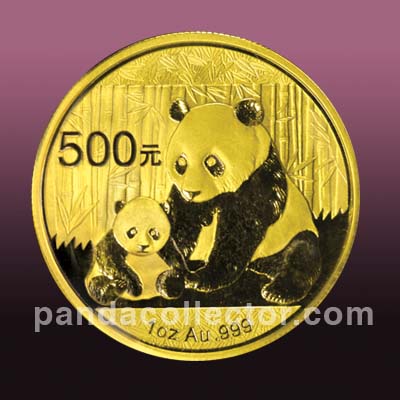
Gold B.U. Panda Coins of China
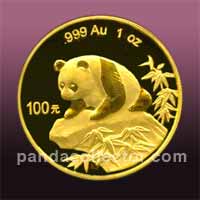
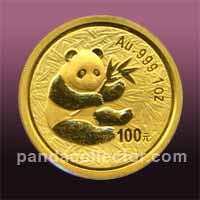
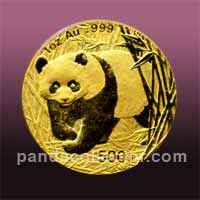
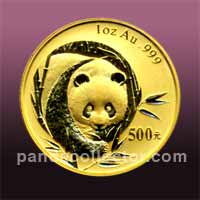
Diameter = 32mm; weight = 1 Troy ounce, or 31.1 grams of .999 fine gold
PPI (Panda Paucity Index) values: Higher is scarcer
Roll your mouse over the coins to see the obverse side with The Temple of Heaven in Beijing.

Need Chinese Coin Prices? Want to Know What's Happening in Chinese Coins? Get China Pricepedia
"Peter Anthony's Gold and Silver Panda Coin Buyer's Guide is indispensable!"
PCGS Library Review
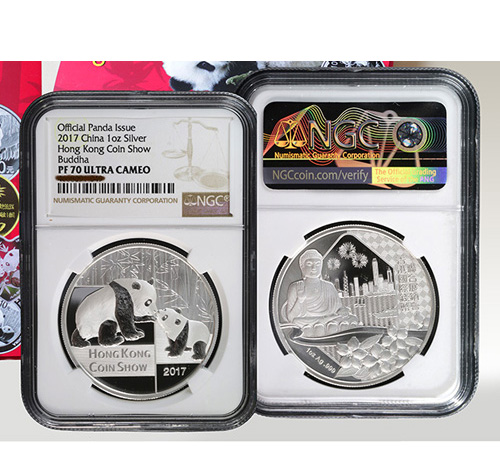
Low Mintage 2017 Hong Kong Coin Show Panda
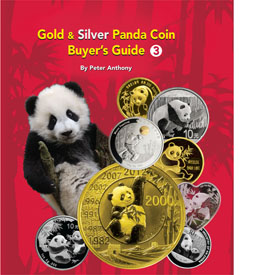 Panda Book
 Coins for Sale
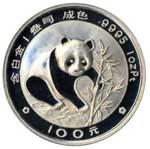
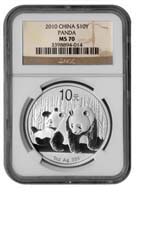
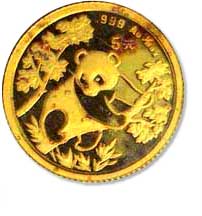
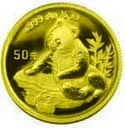
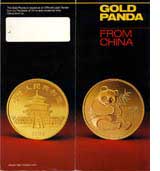

What is the most interesting and attractive series of gold coins in the world? The gold Panda coins of China has to be a contender for the award. 2007 marked the 25th year since it was introduced and over 2 million one-ounce gold Pandas coins have been minted in that time. The gold Panda Coin not only features a universally appealing subject, but each year (with one exception) carries a different design. Because it is updated annually, the Pandas are naturals to be collected by date. Of all the Pandas, no size better displays the year’s artwork than the popular one ounce gold coin—the flagship of the series.
A collector might reasonably assume that determining the key dates in a modern coin series is as simple as checking the mintage figures to see which years had the lowest production. The first indication that things might not be so simple for Pandas is that the Chinese Mint has published two different sets of mintage statistics — an official list of mintage figures and a supplementary one that was released for the 25th Anniversary celebration in 2007. The Anniversary list states that it is the actual number of coins that were minted, not the planned amount that was originally published. Some of the figures diverge substantially: for instance the 1988 original mintage is 167,000, but the 25th list shows 289,055 made.
The second indication that there are other factors that influence availability is that some dates with decent mintage quantities are rather difficult to locate.
In any case, the two lists are interesting to compare. But do they answer the question, what years are the scarcest; not to mention— in what condition are the coins? Remember, the Pandas were marketed as bullion items and many were treated as such. While each coin was shipped from the mint individually wrapped in a protective plastic pouch, many were removed to make them easier to stack; others were fitted for jewelry. As a consequence a significant number of Pandas were soon scratched and marked in ways that make them undesirable for collectors.
To top that off, the Chinese Mint appears to have had some quality control problems during the early years of the series. Although all gold Pandas are struck from .999 fine gold, they do include trace amounts of copper. This copper can tint the surface of the coin with a red stain. It turns out that some dates can be quite difficult to locate without these flaws, which makes the series a real challenge for Panda-lovers interested in assembling a showpiece collection.
The Panda Paucity Index (published 2007)
Numismatic researchers have long turned to auction records for estimating coin populations. Previous published research efforts have used sales at major numismatic auction houses like Heritage, Stack’s, Superior Stamp & Coin, Bowers and Merena, etc. to track the frequency that a specific coin is offered for sale. This permits researchers to work witha random sample of extant coins.
Frequency of auction appearances is a good indicator of how difficult it will be to find a coin. If a date only turns up once every four months, on average, than a collector should recognize that this date may take some searching and patience to acquire.
For Pandas, traditionally valued for little more than their intrinsic value, there is hardly any formal auction record to speak of — except in the 21st century world of eCommerce. Online auctions take place 24/7 and—for coins like Pandas—are the most widespread, public marketplaces on earth.
Based on over 3,000 online auctions we have created the Panda Paucity (or Paw-City, as we like to joke) Index. The PPI is a ranking from 1 to 100 to show how often a coin is offered for sale at auction. In this index 100 represents the hardest-to-find Panda and 1 the most common. We believe this index is an easy to use and effective way to compare relative scarcities of Panda dates.
Above all, remember that compared to an American Eagle, or a South African Krugerrand (there were nearly 3x the quantity of Krugerrands issued in just 1978 as the total number of Pandas coined in 25 years), no Panda is truly common. This makes hunting for these coins an exciting numismatic adventure mixing fun, beauty and investment potential.
~PA~
Contact us
Please send comments or questions about this page to: info@pandacollector.com
CE Collection
Pandas and other quality world coins
Gold B.U. Panda Coins of China
Diameter = 32mm; weight = 1 Troy ounce, or 31.1 grams of .999 fine gold
PPI (Panda Paucity Index) values: Higher is scarcer
Roll your mouse over the coins to see the obverse side with The Temple of Heaven in Beijing.